The Ultimate Guide to Choosing the Right Carton Carrying Handle
Nearly 80% of cardboard box failures occur at the handle, yet a well-designed carton carrying handle distributes weight across your hand’s pressure points, significantly reducing strain. This simple plastic or reinforced paper component attaches to the box’s side flaps and locks into place with a gentle push, creating a secure loop for your fingers. It transforms an awkward, top-heavy load into a balanced, comfortable carry—saving your grip and protecting the box’s contents from sudden drops.
Why Handles Matter for Boxed Goods
Carton carrying handle design is critical because it transforms a cumbersome box into a stable, balanced load. A well-placed handle aligns with the package’s center of gravity, preventing the contents from shifting or the box from tipping during transit. This direct integration eliminates the need for secondary packaging like straps or secondary bags, saving time and reducing material waste. Furthermore, a sturdy handle distributes weight across a broader surface area of the hand, which minimizes pressure points and makes repeated lifting significantly less fatiguing. For high-volume e-commerce shipments, a reliable handle also reduces the risk of the box tearing or the bottom giving way, ensuring the product arrives intact without requiring over-engineering of the box walls. Ultimately, a functional handle is a key factor in customer satisfaction, directly influencing the perceived durability and ease of use of the packaging itself.
Consumer convenience and ergonomic benefits
Well-designed carton carrying handles transform bulky loads into single-handed carries, reducing the physical strain of gripping awkward boxes. Ergonomically contoured cutouts distribute weight evenly across the palm, preventing finger fatigue during extended transport. This design allows consumers to effortlessly manage multiple purchases while maintaining a natural wrist angle, lowering the risk of strain from repetitive lifting. A properly positioned handle also centers the box’s weight, improving balance and preventing contents from shifting. For everyday shopping, this reduces reliance on additional bags and simplifies moving goods from car to counter.
Consumer convenience lies in a handle that turns a heavy, awkward box into a balanced, one-handed load—ergonomics that prevent fatigue and make carrying intuitive.
Reducing product damage during transport
A securely integrated carton carrying handle is critical for minimizing product damage during transport by eliminating unstable, top-only gripping. When a handle distributes the box’s weight through reinforced die-cut panels or attached straps, it prevents the sudden shifting or tilting that crushes internal items. Without a dedicated handle, carriers often pinch box corners, creating stress points that collapse and expose goods to impact. The handle also ensures the box remains level during lifting, stopping bottled or fragile products from sliding into each other. This direct force transfer reduces vibrations and shocks, keeping delicate contents intact from warehouse to delivery.
Brand differentiation through packaging details
Subtle modifications to a carton carrying handle shape or material can create distinct brand recall. A rounded, ergonomic cut-out feels premium, while a reinforced plastic insert signals durability for high-value goods. The handle’s tactile feedback—whether smooth, textured, or rigid—becomes a silent signature of product quality. By customizing handle color, embossing logos, or integrating tear-away tabs for secondary display, brands differentiate without altering the primary box structure. Q: How does a handle design reinforce brand identity? A: A unique handle contour or color-matching liner creates immediate visual recognition, distinguishing the package from competitors on a crowded shelf.
Types of Handles for Corrugated and Paperboard Boxes
The most common carton carrying handle is the die-cut hand hole, often reinforced with a plastic or paperboard insert for heavier loads. For lighter paperboard boxes, a simple perforated flap handle that pushes inward works well. Corrugated boxes frequently use a tuck-in handle, where a strip of board folds back to create a smooth grip. Another practical option is the polypropylene or nylon strap handle, attached with rivets, which provides superior strength for bulk items. Finally, silicon or rubber ribbon handles are popular for retail packaging, offering a comfortable, reusable grip without tearing the box.
Die-cut hand holes: simple and cost-effective
Die-cut hand holes offer a simple and cost-effective carton handle for box carrying handle solution for corrugated and paperboard boxes. Created by directly cutting an aperture into the box material, they eliminate the need for additional components like plastic inserts or tape. This streamlined design keeps manufacturing costs low and packaging lightweight. While best suited for smaller, lighter loads, die-cut hand holes maintain the box’s flat storage capability and can be reinforced with a fold-back flap for added tear resistance.
- Eliminate extra material and assembly costs
- Maintain a flat panel for efficient shipping and storage
- Provide adequate ergonomic grip for lightweight packages
Plastic or polypropylene strap handles
Plastic or polypropylene strap handles provide a durable, high-strength carrying solution for heavy corrugated boxes. These straps are typically attached through die-cut slots or reinforced with adhesive patches, forming a secure loop. Their flexible nature distributes weight evenly, reducing strain on the box structure and the user’s hand. Unlike rigid handles, polypropylene straps lie flat when not in use, simplifying stacking and storage. They resist moisture and tearing, making them suitable for products like bulk pet food or hardware items. The straps are available in varying widths and thicknesses to match specific weight capacities, with a smooth or textured surface to improve grip during transport.
Fabric or webbed carrying loops
Fabric or webbed carrying loops integrate seamlessly into corrugated box handles by threading through reinforced slots, distributing weight across a wider surface for enhanced comfort. These loops, often made from nylon or polyester webbing, fold flat against the box when not in use yet pop up for immediate grip. Unlike rigid options, they provide a soft, non-abrasive contact point that minimizes hand strain during prolonged carries. Their flexibility allows secure carton transport on oddly shaped or heavy paperboard boxes, as the webbing adapts to the load’s shift without cutting into the user’s palm.
Adhesive-backed handle attachments

Adhesive-backed handle attachments offer a swift, retrofittable solution for enhancing corrugated boxes without altering the original packaging design. These handles feature a high-tack adhesive layer that bonds firmly to the box surface, eliminating the need for die-cut slots or internal reinforcement during manufacturing. They are ideal for lightweight products where a flush, low-profile carry point is needed. Unlike integral handles, they allow post-production application directly onto assembled cartons, making them perfect for small runs or custom orders. The adhesive’s strength typically supports loads up to 15–20 pounds, provided the box surface is clean and uncontaminated. For best results, press firmly for five seconds after application.
| Handle Type | Adhesive-backed |
| Application | Post-production, any box |
| Weight Capacity | Up to 20 lbs |
| Key Benefit | No box modification needed |
Material Selection and Structural Strength
For a carton carrying handle, material selection and structural strength revolve around balancing rigidity with flexibility. A handle made from thin, low-grade cardboard will tear under moderate weight because it lacks tensile strength to distribute stress across the die-cut opening. Instead, choose a denser, laminated paperboard or a reinforced plastic insert that can handle the localized pressure from the user’s fingers. The handle’s structural strength also depends on its width and curvature—a wider, gently curved slot spreads the load better than a narrow, sharp cut.
A handle that feels flimsy when lifted will likely fail before the box itself, so reinforcing the attachment points with a glued-on patch or a thicker material layer directly prevents catastrophic tearing.
Avoid overly rigid materials that crack under strain, and always match the handle’s thickness to the carton’s overall weight capacity.
Kraft paper versus reinforced paperboard
In carton carrying handles, Kraft paper versus reinforced paperboard dictates load capacity and tear resistance. Kraft paper, typically 80–120 gsm, offers a cost-effective, flexible handle for lightweight items under 5 kg, but it lacks stiffness, risking failure under prolonged stress. Reinforced paperboard (often laminated with a scrim or inner fiber layer) handles 10–15 kg without deforming, making it essential for heavy bulk cartons. The trade-off is cost and thickness: reinforced board adds 1–2 mm to the die-cut profile, potentially requiring larger carton flaps for attachment. Q: When should I choose reinforced paperboard over Kraft paper for a handle? A: Choose reinforced paperboard when the carton’s filled weight exceeds 8 kg or when multiple handles bear asymmetric loads, as Kraft paper’s tensile strength alone cannot prevent edge tears or handle elongation.
Role of thickness and flute type in handle durability
Handle durability directly correlates with corrugated board thickness and flute profile. Thicker board, measured in caliper, resists compression and prevents tearing under load. The flute type determines structural rigidity; an E-flute provides a dense, stiff surface ideal for die-cut handles, while a B-flute offers superior cushioning and flex resistance for heavier applications. A thicker board paired with a robust flute minimizes stress fractures at the handle cutout.
Question: How does flute orientation affect handle tear resistance?
Answer: Perpendicular flute alignment relative to the handle slot directs compressive forces along the flute columns, significantly reducing edge-tear propagation compared to parallel alignment.
Plastic handle inserts versus fully paper-based options
When picking a carton carrying handle, you’re often choosing between plastic handle inserts versus fully paper-based options. Plastic inserts give you a rigid, pre-formed loop that won’t sag under heavy loads—great for bulky items. Paper-based handles, like die-cut hanks or reinforced paper straps, feel more eco-friendly but can tear or flatten if the cardboard grain isn’t aligned with the weight. For lighter shipments, paper works fine; for frequent lifting, plastic inserts provide consistent comfort and strength.
| Aspect | Plastic Handle Inserts | Fully Paper-Based Options |
|---|---|---|
| Load capacity | Handles heavier weight well | Best for light to medium loads |
| Comfort | Firm, smooth grip every time | Can feel rough or flimsy |
| Moisture resistance | Won’t weaken when damp | Prone to softening or tearing |
Designing Optimal Handle Placement
The core principle in designing optimal handle placement for a carton carrying handle is aligning it directly above the load’s center of gravity. This single factor prevents the carton from tilting or twisting during transit, which causes user fatigue and potential spillage. Placing the handle too high forces an awkward upward wrist angle, while a position too low creates a dangerous, unbalanced swing. The most effective layout pairs the handle slot with a reinforced cutout that sits centered over the major product weight within the carton’s depth.
A handle misplaced by even one inch relative to the packaged content’s balance point effectively doubles the perceived lifting effort.
For a stable, one-handed carry, the slot should be wide enough for a gloved hand but narrow enough to prevent the carton from sagging, ensuring the load remains vertical and the user’s grip remains natural.
Centered versus offset handle positions
Choosing between a centered versus offset handle position directly shapes how your carton balances in hand. A centered handle sits over the package’s center of gravity, making loads feel neutral and stable—ideal for evenly packed boxes. An offset handle shifts the mass forward or backward, which can help control heavy contents by tilting the carton slightly, but it may strain one wrist. Always match the handle placement to your product’s weight distribution for comfort. Counterbalance is the key difference: centered for symmetry, offset for directional control.
In short, centered handles offer balanced carrying, while offset handles improve control for uneven loads by shifting the center of mass.
Weight distribution and balance considerations
When you’re figuring out handle placement for a carton, optimized weight balance is the secret to making it feel lighter in hand. A handle positioned directly above the center of gravity prevents the box from tilting or sagging, which strains your wrist and arm. If the carton holds uneven contents—like a six-pack with bottles only on one side—shifting the handle slightly toward the heavier side counterbalances that load. Key considerations include:
- Aligning the handle with the carton’s vertical centerline to avoid a lopsided swing.
- Testing with a full load to ensure the bottom doesn’t dip or the top doesn’t pull backward.
- Accounting for shifting contents, like loose items, by adding a slight forward bias to keep the carton level during carry.
Compatibility with automated packing lines
For seamless integration, handle placement must align precisely with automated packing line specifications, including gripper arm reach and conveyor pitch. Off-center or asymmetrical handles cause jams during robotic pick-and-place cycles. Flat, non-protruding designs prevent snagging on side rails. Cut-out handles that lie flush with the carton surface allow uninterrupted flow through shrink tunnels and label applicators. Ensuring the handle’s fold direction matches machine feed orientation eliminates misfeeds, directly reducing line stoppage time.
Strategic handle placement ensures compatibility with automated packing lines, minimizing equipment jams and maximizing throughput.
Manufacturing and Production Methods
Carton carrying handles are primarily manufactured through integrated die-cutting directly into the corrugated board, forming a punch-out aperture and a folded strap. This method eliminates material waste and speeds up assembly. Alternatively, injection-molded plastic handles are attached via hot-melt adhesive application, providing superior load-bearing for heavier cartons. A precision rotary anvil stamps perforations for the handle crease, ensuring a clean fold. A subtle interplay between paper grain direction and handle orientation drastically affects the strap’s tensile strength during repeated lifting. For automated packaging lines, handles are pre-applied as a continuous film roll, with heat-sealed bonds that cure in under two seconds for rapid throughput.
Rotary die-cutting for precise cutouts
Rotary die-cutting for precise cutouts uses a cylindrical die rotating against a hardened anvil to punch handle apertures with micron-level accuracy, essential for high-volume carton production. This method eliminates burrs and ragged edges by shearing paperboard cleanly, ensuring the handle slot aligns perfectly with the folding creases. Unlike flatbed processes, rotary cutting maintains consistent pressure across the entire sheet, preventing distortion in recycled or coated stock. How does rotary die-cutting achieve such tight tolerances? It relies on magnetic cylinders holding flexible dies, allowing quick tolerance adjustments without changing the entire tool. This is ideal for creating ergonomic, interlocking handle cutouts that withstand repeated lifting without tearing.
Stamping and pressing handle forms
Stamping and pressing handle forms in carton manufacturing involve forcing a metal die through the corrugated board to create a recessed integral handle. This process simultaneously cuts two parallel slots and depresses the material between them, forming a rigid, ergonomic grip without requiring adhesive. The die profile determines handle depth and edge smoothness, with progressive pressing often used for thick, multi-ply boards. Unlike riveted handles, this method eliminates separate components but requires precise alignment to avoid tearing the linerboard. A common failure point is insufficient compression, which leaves the handle prone to collapsing under load, making die sharpness and pressure control critical. Adjusting the press stroke length allows handling varying board calibers without retooling.
Automated handle attachment machinery
Automated handle attachment machinery integrates directly into high-speed carton forming lines to apply pre-cut plastic or paper handles. These systems utilize servo-driven pick-and-place units to retrieve handles from a magazine, then apply adhesive via hot-melt or cold-glue applicators under precise pressure and timing. Servo-driven handle placement ensures repeatable accuracy within sub-millimeter tolerances, crucial for maintaining consistent bond strength across varied carton sizes. The machinery synchronizes with lane dividers and compression sections to prevent handle misalignment during throughput peaks. Integrated vision systems typically verify adhesive coverage and handle orientation before the carton proceeds to downstream sealing stations. Cycle rates often exceed 60 handles per minute, contingent upon adhesive curing specifications.

Ergonomics and User Experience
The ergonomics of a carton carrying handle directly dictate user experience by influencing grip comfort and load distribution. A poorly designed handle, such as a thin die-cut slot, concentrates pressure onto the fingers, causing pain and reducing control. A properly contoured handle with a broad, padded surface spreads the load across the palm, minimizing localized stress and enabling prolonged carrying. Cutout size and edge finish are critical; a slot too short forces fingers into a cramped, unnatural position, while rough or sharp edges can cause abrasion. An angled or pivoting handle can further improve wrist alignment by reducing deviation from the neutral hand position, making the carton feel significantly lighter and easier to maneuver for the user.
Comfort grip features for heavy loads
For heavy loads, comfort grip features prioritize pressure distribution to mitigate concentrated stress on fingers and palms. A contoured, wider handle surface increases contact area, reducing localized strain during extended carries. Optimized soft-touch padding further absorbs shock and minimizes hand fatigue. The grip’s texture must also ensure secure hold even with moisture, preventing slippage without increasing pinch risk. Strategically placed finger grooves align with natural hand anatomy, promoting neutral wrist posture to avoid repetitive strain.
Hand hole sizing for gloved or bare hands
Hand hole sizing must accommodate both bare and gloved hands, a critical factor in universal handle usability. For bare hands, a minimum width of 38 mm and height of 125 mm allows a natural grip without knuckle abrasion. Gloved hands demand larger cutouts—at least 50 mm wide and 150 mm high—to prevent fabric bunching or entry friction. The aperture should feature smooth, rounded edges to avoid glove tearing or skin pinching during weight shifts. Testing with insulated and nitrile gloves ensures no user is excluded.
- Bare hand openings below 38 mm width compress fingers against sharp corners, causing fatigue.
- Gloved hand holes under 50 mm width restrict movement in cold-weather or chemical-resistant gloves.
- Vertical clearance of 150 mm allows glove cuff to pass through without snagging.
- A 2–3 mm edge radius eliminates pressure points for both skin and glove material.
Impact of handle shape on finger strain
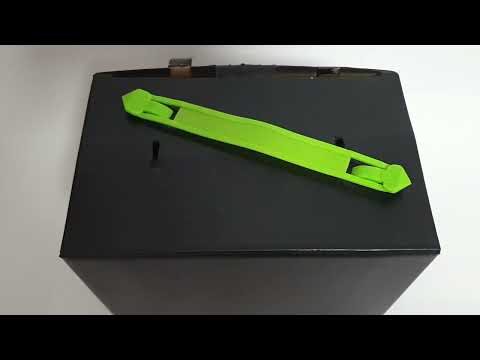
The handle shape directly dictates the distribution of contact pressure across the fingers, making it a primary factor in mitigating finger strain. A flat, narrow handle concentrates force onto the finger flexor tendons, rapidly inducing fatigue and discomfort. Conversely, a contoured or rounded profile better disperses load across a larger surface area of the palm and finger pads. To minimize strain, the design should follow a clear sequence:
- Provide a sufficiently wide radius to avoid sharp edges cutting into the fingers.
- Include a curved undercut that allows the fingers to wrap naturally without hyperextension.
- Ensure the grip depth prevents the knuckles from pressing against the carton surface, which otherwise causes localized compressive finger strain during lifting.
Eco-Friendly and Recyclable Handle Solutions
The old corrugated carrier groaned under the weight of six glass bottles, its paper handle already stretching thin. Now, eco-friendly and recyclable handle solutions have rewritten that story. A modern carton carrying handle, punched from the same fiberboard as the box, eliminates plastic entirely; it folds into a rigid, ergonomic loop that bears heavy loads without tearing. Q: How does a fully recyclable handle maintain strength? A: By using reinforced die-cut patterns and locking tabs that distribute weight across the entire carton face. After use, the entire package—handle and all—goes straight into the recycling bin, no separation needed. No tape, no glue, just the natural resilience of renewable paper fibers engineered for repeated gripping on the daily commute home.
Compostable adhesives and reinforcements
Compostable adhesives and reinforcements transform carton carrying handles into fully biodegradable systems. These plant-based adhesives, often derived from starch or cellulose, bond handle reinforcements directly to the cardboard without synthetic chemicals. To ensure proper performance, follow this sequence:
- Verify adhesive compatibility with your carton’s coating (e.g., recycled fibers or waxes).
- Apply via cold-set or hot-melt compostable applicators—hot-melt options (like PLA-based) provide fast initial tack.
- Use fiber-reinforced compostable tape as a reinforcement patch, which integrates with the adhesive to prevent tearing under load.
These materials break down in industrial composting within 90 days, leaving no microplastics in the handle’s eco-cycle.
Monomaterials that simplify recycling
Monomaterials simplify recycling by using a single plastic type for the entire carton carrying handle, such as all-polypropylene or all-polyethylene. This eliminates the need to separate mixed components at recycling facilities. Single-material handle designs can be created with flexible yet durable constructions, often using a monopolymer ribbed structure.
- Choose a handle made entirely of one recyclable resin, like PP or PE.
- Ensure the adhesive or attachment method is compatible with that same material.
- Confirm your local recycling stream accepts handles without complex separation steps.
This straightforward approach keeps your cartons eco-friendly from curb to cradle.
Biodegradable plastic alternatives for handles
Biodegradable plastic alternatives for carton carrying handles utilize materials like PLA (polylactic acid) from corn starch or PHA from microbial fermentation, which break down under industrial composting conditions. These compounds must offer sufficient tensile strength to support typical beverage or grocery loads without premature tearing. Starch-blended polyesters provide flexibility for molded handle shapes while remaining compostable. For functionality, ensure the handle’s wall thickness compensates for the lower impact resistance of bioplastics compared to conventional polymers. Compostable polymer blends now achieve shelf-life stability, degrading only after disposal in active microbial environments.
Biodegradable plastic handles balance load capacity with industrial compostability.
Industry-Specific Applications and Trends
In a bustling beverage warehouse, a shift manager watches workers hefting 24-bottle cases, their hands protected by integrated plastic carrying handles that snap firmly into die-cut carton slots. This practical evolution replaced unreliable glued-on straps that once failed mid-lift. Across the e-commerce fulfillment floor, a picker easily pulls a bulk-pack of canned pet food using a sustainable paperboard handle designed for high-speed robotic packing lines, eliminating the need for excess shrink wrap. In the fresh produce sector, a supermarket logistics team now prefers modular handles that lock onto two separate cartons simultaneously, allowing one worker to safely carry a combined 30-pound load of apples without shifting weight. These adjustments reflect a quiet shift toward handles engineered for specific product weights and automation compatibility, not generic solutions.
E-commerce shipping boxes with integrated lifts
E-commerce shipping boxes with integrated lifts eliminate the need for separate handle attachments by embedding a self-erecting carrying mechanism directly into the corrugated carton. These lifts are die-cut into the box’s sidewalls, folding outward to form a rigid, ergonomic grip that supports heavy parcel weights without tearing. The design ensures one-handed lifting during fulfillment and doorstep delivery, reducing strain on workers and couriers. By integrating the handle into the box’s structure, packers skip additional taping or slotting steps, accelerating packing speed while maintaining unibody strength for stacked shipments.
Q: How do integrated lifts improve durability for heavy e-commerce parcels?
A: They distribute load stress across reinforced score lines, preventing handle separation even at maximum mailer weight capacity.
Grocery retail and bulk product containers
In grocery retail, bulk product containers for grains, flours, and pet food rely on integrated carton carrying handles to enable safe, one-handed transport. These reinforced die-cut handles must distribute the heavy load evenly across the corrugated structure, preventing tearing during restocking or customer carry-out. Without this ergonomic feature, large bulk boxes become cumbersome, often requiring secondary bags or tools. The handle design directly supports efficient shelf-stocking and consumer convenience, turning a potential handling hazard into a reliable, user-friendly package that encourages repeat purchase.
Premium gift packaging with decorative handles
In high-end retail, premium gift packaging with decorative handles transforms a carton into a tactile brand statement. These handles, crafted from braided rayon or foil-stamped ribbon, integrate directly into the carton’s lid or side panels, blending structural support with aesthetic flair. A satin loop handle might be paired with a magnetic closure box for luxury cosmetics, while a twisted paper-cord handle suits artisan chocolate sets. The handle must bear the load without tearing, so reinforced anchor points—often glued with industrial-grade adhesive inside the carton flap—are critical. This detail elevates unboxing from function to ceremony, making the package itself the first gift the recipient touches.
| Aspect | Decorative Handle Type | Typical Carton Use |
| Handle Material | Ribbon (satin/organza) | Cosmetics, jewellery, perfumes |
| Attachment Method | Internal anchor plate glued to carton | Wine boxes, gift sets |
| Load Capacity | 1–3 kg | Chocolates, small electronics |
Testing Standards and Quality Assurance
Testing standards for a carton carrying handle ensure it withstands a static load of at least 25 kg for 24 hours without tearing, and a dynamic drop test from 76 cm on its corner. Quality assurance involves verifying that the handle’s adhesive bond to the carton board meets a minimum peel strength of 2.5 N/mm. Q: How is handle durability tested daily? A: A pneumatic tug test applies a lateral force of 15 kg for 10 seconds to check for detachment. Each production batch is sampled per ASTM D4169, with a 2.5% failure rate as the rejection trigger.
Weight capacity and pull force thresholds
When testing a carton carrying handle, we focus on two main things: how much weight it can hold and how much pull force it withstands. The weight capacity and pull force thresholds are determined through simple, repeatable tests. Here’s the typical sequence: first, we attach the handle to a fully loaded carton. Then, we apply a steady downward pull to simulate lifting. The handle must not tear or detach under its rated load. For pull force, we check if the handle resists sudden jerks—like when a user yanks it off a shelf. These thresholds ensure the handle won’t fail during normal use.
- Start with a static load test—add weight gradually to find the maximum safe capacity.
- Run a dynamic pull test—apply a quick, forceful tug to measure peak resistance.
- Compare results against a set pass/fail threshold for both weight and force.
Fatigue testing for repeated use scenarios
Fatigue testing for repeated use scenarios simulates a shopper carrying the carton over multiple trips. We load the handle with a typical weight, then cycle it up and down thousands of times to see where it weakens. This catches handle endurance under repetitive stress, like fraying stitches or cracking plastic, before you’d notice in daily use. We also test with different grip angles to mimic real hand movement.
Fatigue testing for repeated use scenarios proves the handle survives the daily wear of carrying, not just one perfect trip.
Environmental stress cracking in plastic components
When testing carton carrying handles, environmental stress cracking resistance is key. This happens when plastic handles crack under combined strain and contact with everyday substances like cleaning sprays or hand lotions. To check durability, you can follow a simple routine: apply a small cut or notch on the handle to simulate real-world damage, then expose it to a stress-cracking agent (like soapy water or oil) while bending it slightly for a set time. If no cracks appear, the plastic blend is reliable. This test helps ensure your handle won’t snap mid-carry after just a few uses.
Cost Analysis and Budget-Friendly Options

For a budget-friendly carton carrying handle, analyze the trade-off between material cost and user breakage. Opting for a thinner, die-cut plastic handle reduces per-unit expense but demands precise hole alignment to avoid tearing during use. Reinforced paper handles with adhesive patches offer similar cost savings for lighter loads, as they avoid complex molding. A slightly higher spend on a wider strap can eliminate the hidden cost of refunds from torn handles. Always test your specific carton weight and geometry against handle material thickness to find the cheapest reliable option.
Minimalist die cuts versus add-on handles
When pinching pennies, minimalist die cuts are the budget champion. They’re simply punched out of the carton itself, so there’s zero extra material cost or assembly labour. You just fold and go, which is perfect for high-volume runs. Add-on handles, like plastic or fabric loops, add both parts and manual insertion steps—costing at least two to three times more per unit. For a small-volume order or a premium feel, however, that extra expense buys comfort and durability a die-cut slot can’t match.
Minimalist die-cuts save on materials and labour; add-on handles cost more but offer better ergonomics.
Volume pricing for custom handle designs
For custom handle designs, volume pricing tiers directly correlate with die-cutting setup costs. A one-off custom handle may incur a 40% surcharge, whereas ordering 5,000+ units typically reduces per-unit cost by 25–35%, as the tooling amortization becomes negligible. Precision-engineered perforation patterns for ergonomic handles can further lower material waste, improving bulk margins. What is the minimum order quantity (MOQ) to access volume pricing for custom handle designs? Most suppliers require 2,500–10,000 handles depending on cut complexity and paperboard thickness.
Trade-offs between handle durability and material expense
While plastic handles offer superior durability against tearing and moisture, their higher material cost forces a trade-off. Choosing the long-term cost-per-use of heavy-duty polypropylene means a higher upfront expense, yet it prevents failures that could ruin goods. Conversely, thin die-cut cardboard handles are budget-friendly but risk snapping under heavy loads, turning immediate savings into potential product damage. This clash between upfront material expense and long-term handling resilience defines the core decision for every carton user.
| Material Choice | Durability Trade-Off | Expense Trade-Off |
|---|---|---|
| Thick Plastic (PP) | High tear resistance, handles heavy loads | Higher unit cost, premium investment |
| Die-Cut Cardboard | Low tear strength, prone to failure | Lowest material expense, risk of damage |

Future Innovations in Portable Packaging
Future innovations in portable packaging will transform carton carrying handles into intuitive, adaptive tools. Expect biodegradable handles that integrate self-tightening webbing, automatically cinching to securely grip varied contents like loose produce or multiple boxes. Embedded with a subtle pressure-release film, the handle could soften its grip when carried for extended periods, redistributing weight to prevent finger fatigue.
These handles will dissolve their structural rigidity upon disposal, yet remain robust during dozens of active trips, merging ergonomic adaptability with end-of-life compostability.
Advanced thermochromic materials in the grip will shift color to indicate optimal load balance or signal when the handle is fatigued.
Smart handles with embedded RFID tags
Smart handles integrate embedded RFID tags to transform a carton carrying handle into a data node. The tag enables instant, contactless tracking of the container’s contents and journey. For logistics, a single scan of the handle updates inventory records without opening the carton. The sequence is:
- An RFID reader emits radio waves, powering the passive tag in the handle.
- The tag transmits a unique identifier and encrypted payload.
- A backend system records the location and timestamp, verifying the handle’s status.
This embedded RFID functionality supports automated asset verification, reducing manual check errors during transit and storage.
Self-locking handle mechanisms for reuse
For reusable cartons, a self-locking handle mechanism is a game-changer. Instead of a single-use plastic loop, you get a sturdy, integrated handle that snaps shut after each use, staying flush against the box until needed. This clever design relies on interlocking tabs that require a specific twist or pinch to release, preventing accidental opening during transport. When you’re done, a simple push re-engages the lock, making the carton ready for its next trip. This reusable locking handle eliminates the need for tape or separate accessories, keeping the packing and unpacking process smooth and frustration-free.
Modular handles for multipack configurations
Modular handles for multipack configurations transform adaptive carry solutions by allowing users to snap on additional grips as pack sizes expand. These handles integrate with carton perforations, enabling a single base handle to connect two, four, or six units through interlocking tabs. Each module distributes weight evenly across linked packs, preventing carton sagging during transport. A detachable design lets consumers reconfigure handles for different shopping loads, while reinforced attachment points ensure secure lifting even when carrying multiple heavy cartons simultaneously.
- Snap-on extensions permit handles to grow with pack quantity without separate tools.
- Weight-balancing tabs align modules across carton seams for stable multiport carrying.
- Detachable clips allow quick conversion between single-pack and multipack handle modes.
- Reinforced lock points prevent separation under load when linking multiple cartons.